
Surveillance Systems
CCTV cameras give you the advantage of viewing your property from the comfort of your couch, bed, holiday destination, office and vehicle. Camera footage can be viewed on a television, monitor or via remote login. Remote login allows you to view all connected cameras through your smartphone regardless of where in the world you are situated. This gives you peace of mind by allowing you to check in on your most prized possession, your loved ones.
What to Look for When Buying a CCTV System:
- Should the cameras be visible to other?
- How do I know what to use indoors and outdoors?
- What are the light conditions like?
- Is image clarity important?
- Cable lengths?
- Ease of installation?
- Is audio required?
Should my CCTV cameras be discreet or a visual deterrent?
Bullet cameras or box cameras are visible to passers by and this can be a great deterrent of theft and crime. Positioned but not limited to on walls and boundaries. Dome cameras are smaller and more discreet. Generally used under ledges, inside property but can be used for other applications.
How do I know what to use indoors and outdoors?
When thinking where you would like to place your cameras, you might want to think about how they will be mounted and housed, in order to ensure that they’re in the best location and well protected. For example, if your camera is to be placed outside, you will want it to be robust and weather proofed and must have an ingress protection rating of 65 or 67. If it’s to be placed indoors you will want to ensure it will not be affected by grease or steam from a kitchen.
What are the light conditions like?
Test different camera models to see what works best with the lightning in your area, because no matter whether they’re inside or outside, the lighting will differ throughout the day. You will want to check any reflections and backlighting during the day and night.
Is image clarity important?
Depending on how expansive the area is that you want to cover, the resolution of the CCTV camera you choose will need to reflect the landscape in order to provide a clear, useful image. However, if situated in a small room, the camera need not be of a high resolution.
Cable Lengths
Determine whether you want to monitor the boundaries, yard or indoors
Ease of installation
Generally the easier installation can be on the main building but should you require the installation on the perimeter or yard then cable routes should be determined. This can involve trenching, conduiting and installation of poles.
Is audio required?
Audio isn’t required, however, if you do wish to opt for audio there are systems where you can speak to a person who has broken into the property. Audio can be used to deter criminals by automatically playing something when they get a certain point inside, an ideal way to make them think that there are people inside the building.
Choosing the ideal system
The first step to the decision process is an understanding of the system required and why we will require that system. The type of video recorder is the a major decision in the choice of a surveillance system as it determines, but not limited to the cost, the installation, the image quality, scalability, area to be covered…
What is NVR, DVR, HVR
NVR is network video recorder. As the name suggests, NVR recorders record video images directly from the network using Cat5 or Cat6 Ethernet cables as the transmission medium connected via with 8 pin, RJ45 connectors. The NVR system is used with IP (Internet Protocol) cameras. There are 3 types of network video recorders viz. NVRs: These video recorders use external power at the camera. PoE NVRs: These NVRs supply ‘Power Over Ethernet’ from the NVR to the IP camera, and the WiFi NVRs with NO camera ports because it connects WiFi IP cameras wirelessly that also use external power.
DVR is digital video recorder. A DVR records uncompressed videos, using coaxial cabling and connectors. Video images are compressed to digital signal before sending video and audio out. The DVR system works with analog cameras. The technology advancements has made it possible for DVRs and analog cameras to record in HD.
HVR is hybrid video recorder which is a combination of the DVR and NVR. This system has the ability to use both analog cameras and the IP cameras.
CCTV Surveillance systems are available in 4 channels, 8 channels and 16 channels, 32 channel options. Channels indicate how many cameras can be used within the DVR, NVR or HVR system. For example, a 16 channel DVR means you can have up to 16 cameras running on the system.
How Does the NVR/DVR Work?
The network video recorder (NVR) simply saves the encoded videos from IP Network cameras from the network. An NVR system does not require dedicated video processing hardware. This can be stored for later viewing.
The digital video recorder (DVR) encodes and processes the analog videos into digital format so that you can view and playback the recordings.
The hybrid video recorder (NVR) combines both NVR and DVR technology when processing images
Both NVR and DVR are responsible for video recording and storage. When connected with a monitor, the NVR and DVR cameras can be easily configured, accessed, viewed and played back.
A hardware difference between a NVR and a DVR is the cameras and cabling they use. A network video recorder (NVR) records video images from IP network cameras wirelessly (WiFi NVR) or via ethernet cables whereas a digital video recorder (DVR) records video images from analog cameras via coaxial cables or ethernet cables with the addition of video baluns.
When the system is connected correctly and powered up, the system will work on the already installed manufacturers software. Should you require stored video images that you can view at a later stage then your technician will install a HDD installed into the recorder. NVR, DVR and HVR surveillance systems can work without an Internet connection however you will need an internet connection for remote login and push alerts. This will make remote viewing possible through downloadable manufacturers software on your smartphone.
DVR vs NVR, Which One to Choose
Refer to the easy comparison reference table between a NVR and a DVR Recorder below:
| Comparison | NVR (Network Video Recorder) | DVR (Digital Video Recorder) |
| NVR/DVR cameras | IP cameras | Analog or coax based cameras, Video Baluns |
| Recording quality | Higher | Lower |
| NVR/DVR system setup | Easier | Medium |
| NVR/DVR camera cost | Higher | Cheaper |
Many users of surveillance systems are changing to IP systems because:
NVR CCTV records higher quality videos
The network video recorder or NVR is paired up with IP cameras, with a resolution starting from 2MP to 12MP (or higher), which is out of the question for analog cameras in a DVR security system and based on the resolution, the NVR system should outshine the DVR system. Higher resolution is required to identify intruders faces and number plates. To capture number plate images, a user will employ LPR(Licence Plate Recognition) or ANPR(Automatic Number Plate Recognition) cameras, based on your specific need.
Ease of Installation
The WiFi NVR connects to cameras through the network wirelessly therefore you don’t need wired transmission so you don’t need to worry about how to run wires to the network video recorder. Place the camera within the network, it will connect. PoE (Power over Ethernet) NVR provide both power and transmission to the cameras via a single Ethernet cable, easy and convenient. Plug and Play
Here is an NVR setup diagram.

By contrast, the DVR needs exact point-to-point connection between the cameras and the digital network recorder, and the analog cameras require both wires for power and data transmission.
| NVR System | Wireless or via single Ethernet cable for power & data |
| DVR System | Both power cable and audio/video cable needed |
NVR recorder is flexible in placement
The NVR transmits video via ethernet cable. That’s to say, you can place the NVR virtually anywhere
So you are free to place the network video recorder to record anywhere you want, like the front door, backyard, garage, or even the remote shed. And it’s easier to hide the NVR in some hard-to-access spots like the attic, ceiling, inside walls, closet, or even crawlspace.
| NVR Cameras | Anywhere with network access |
| DVR Cameras | Limited by the coax cables |
#4. NVR systems are easy to use and configure
#1. NVR surveillance systems do NOT use more bandwidth than the DVR system.
In fact, the DVR systems will also consume network bandwidth, just as the NVR system does.
#2. Buy the NVR and cameras from the same manufacturer to avoid compatibility issues.
Not all IP cameras will work with a certain type of network video recorder (NVR). If you want to add more cameras or find a recorder for your cameras, purchase from the same manufacturer is the best way to avoid compatibility issues.
#3. If you are keen to WiFi NVR camera systems, choose the one with dual-band WiFi signal.
Due to the dependency on the Internet, the wireless NVR may suffer a signal loss when you use other wireless electronic devices (like phones) at the same time. So choose a high quality WiFi NVR system that features dual-band boosted WiFi signal.
Or you may just opt for the wired NVR system which will have no signal and WiFi issues.
DVR Security Systems:
The DVR (digital video recorder) seems to be an old fashioned technology compared with the NVR, with some obvious inconveniences to consider, although they gain the price advantage. But it is not as competitive these days.
#1. Running cable is challenging for DVR systems.
The hard wiring is the biggest disadvantages of DVR security cameras.
First off, each camera will have two cables to deal with, one for power and one for audio and video. And to run back all the wires from different positions, you are very likely to run into the embarrassing situations like drilling holes or the monitoring places are just out of the coax cable reach.
#2. DVR CCTV systems deliver lower quality videos.
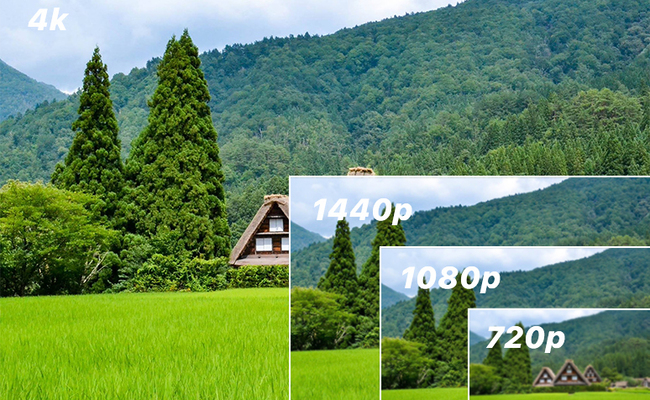
Even though the emerging technology has greatly improved the recording quality of analog cameras (the highest resolution is 1080p so far), it still can not catch up with the NVR cameras.
Some MPX (megapixel over coax) cameras could handle higher resolution, but they will cost you considerably, even more than NVR cameras.
#3. The equipment needs to be closer in DVR security systems.
The DVR IP cameras could be placed no more than 300 feet away from the DVR for the decaying signal over the coax cable.
#4. DVR camera systems have higher maintenance cost.
As I mentioned, the DVR system transmits signal via coax cable, which is much more vulnerable to the environments like the rain or strong wind with the pass of time. If they are exposed outside, you’ll much likely to pay an extra bill in fixing the cable issues.
#5. Digital video recorders have lots of potential issues to deal with.
The DVR system, not to say it is outdated but it is definitely not something futuristic, gains decreasing market share every year.
And that will lead to many potential problems you might have never thought of. For example, some new house owners will find that there is no coax cable prewired to support the DVR system, and you may even find it difficult to get a local DVR system repair man in the future when it becomes truly outdated.
Notes:
There are vendors saying that DVR (digital video recorder) is just as good as NVR (network video recorder) but it’s cheaper. That doesn’t sound convincing, right? You may argue that there are DVR CCTVs with high megapixels. But those DVR cameras will lose the price edge, since they need highly priced video processor chips to produce high quality images.
Instead, the NVR systems are becoming affordable over time as the technology matures.
What Are the Different Types of CCTV Camera?
When it comes to securing your business, there are many different types of CCTV to choose from. Surveillance plays a huge part in today’s society, and with cameras all around us, our day-to-day lives are experiencing higher levels of security each day.
What many people don’t know, however, is that there are a variety of different types of CCTV camera which suit different situations or premises, and that selecting the proper camera for the right application really is vital.

CCTV plays a huge part in today’s society, and with cameras all around us, our day-to-day lives are experiencing higher levels of security each day. What many people don’t know, however, is that there are a variety of different types of CCTV camera which suit different situations or premises, and that selecting the proper camera for the right application really is vital. Here, we run through these types of camera and what makes them unique and more suitable for some venues over others.
Different Types of CCTV
Here, we run through these types of camera and what makes them unique and more suitable for some venues over others.
What are the different types of CCTV cameras?
Dark Fighter Technology Cameras
These cameras can pick up coloured images in very low-light conditions. Dark fighter technology can be used in the day and night and offer optimal performance thanks to its wide range of capabilities. They are equipped with ½” CMOS progressive scan sensors which allows the device to pick up high-quality images and doesn’t require an extra light source – which makes the perfect night time security surveillance camera.
Other benefits of dark fighter technology cameras include:
- Smart features: line crossing, audio and face detection
- Can be used for a multitude of purposes
- High definition
ANPR/LPR Cameras
ANPR and LPR cameras are used to read and store data on registration plates. They offer a simple and efficient solution to many organisations including tolling, hotel overstay management and the obvious: car parking. ANRP stands for Automatic Number Plate Recognition (LPR cameras stands for License plate cameras) and these devices help to obtain copious information in a high traffic area to keep any premises secure.
Other benefits of ANPR/LPR cameras include:
- Smart features: information storage
- Can identify cars that have been banned from a premises
- Allows a business to run smoothly
Internal and External Dome Camera

The dome camera is one most commonly used for indoor and outdoor security and surveillance. The shape of the camera makes it difficult for onlookers to tell which way the camera is facing, which is a strong piece of design, deterring criminals by creating an air of uncertainty. Other benefits of this type of camera include:
Other benefits of internal and external dome cameras include:
- Ease of installation
- Vandal-resistant features
- IR night vision
Bullet Camera

Bullet cameras are long and cylindrical in shape and are ideal for outdoor use. Their strengths lie specifically in applications which require long distance viewing. Installed within protective casings, the cameras are shielded against dust, dirt and other natural elements. The cameras can easily be mounted with a mounting bracket, and come fitted with either fixed or varifocal lenses depending on the requirements of its intended application.
Other benefits of bullet cameras include:
- IR night vision
- Compact size aids installation
- High-quality image resolution
C-mount Camera

Coming with detachable lenses, C-mount cameras allow for simple lens changes to fit different applications. C-mount cameras can cover distances beyond 40 ft thanks to the possibility to use special lenses with these cameras, whereas standard CCTV lenses can only cover distances of 35-40 ft.
Other benefits of C-mount cameras include:
- Can support changes in technology
- Effective for indoor use
- Bulky size makes them noticeable (which acts as a deterrent)
Day/Night Camera

Capable of operating in both normal and poorly lit environments, these cameras benefit from not requiring inbuilt infrared illuminators as they can capture clear video images in the dark thanks to their extra sensitive imaging chips. For this reason, these cameras are ideal for outdoor surveillance applications in which IR cameras are unable to function optimally.
Other benefits of day/night cameras include:
- Record in both colour and black & white.
- Wide variety of sizes available
- Infrared capability
PTZ Pan Tilt & Zoom Camera

PTZ – Pan/tilt/zoom – cameras allow the camera to be moved left or right (panning), up and down (tilting) and even allow the lens to be zoomed closer or farther. These cameras are used in situations where a live guard or surveillance specialist is there operating the security systems.
Other benefits of PTZ cameras include:
- 200m IR night vision
- X36 optical zoom
- High-quality image resolution
Discreet CCTV
These types of cameras allow for discreet placement which means you can capture good footage of theft and criminal damage. Discreet CCTV cameras beneficial because criminals will be less likely to spot them and therefore, they are less likely to be damaged in the process.
Other benefits of discreet CCTV cameras include:
- Can be propped up or mounted
- Can be disguised in various objects
- Effective for indoor use
Thermal Image Cameras/Infrared Cameras

One of the best 24 hour surveillance cameras around providing airports, seaports, boards and many other critical infrastructures with quality images, no matter what time of day it is. Infrared cameras have small LEDs surrounding the lens to help pick up moving figures in pitch black. Thermal image cameras can see over long distances, up to 300 metres away!
Other benefits of infrared cameras include:
- Detect intruders up 250-300 metres away
- Good in low-light
- Thermal radiation passes through visual barriers
Varifocal Cameras

With the ability to zoom in and out without forfeiting its focus. Varifocal cameras allow you to adjust the focal length, the angle and increase or decrease the zoom – ideal for obtaining footage in a square room where you would normally experience a ‘dead zone’ with any alternative, fixed lense camera.
Other benefits of varifocal cameras include:
- Can capture those ‘dead zones’ that other cameras can’t
- Offer exceptional focus
- Work well up close and at long distances
Network Cameras
These cameras share the images across the internet, so CCTV footage can be easily accessed. Network cameras are ideal for both domestic and commercial purposes because you can see what’s going on whilst away from the property.
Other benefits of network cameras include:
- Data can be easily accessed
- Ideal for homes and companies
- Less cabling and less maintenance
High Definition Cameras
High definition cameras have such a high resolution that they’re mainly used in high risk establishments such as banks and casinos. This is to capture a good image of anyone who enters and exits to maintain high security and maximum safety. These cameras are great for spotting misconduct and allows the user to zoom in for extra clarity, should the footage need to be used in court.
Other benefits of high definition cameras include:
- Clear, detailed pictures
- Offer maximum safety for high risk establishments
- Can zoom in without losing focus